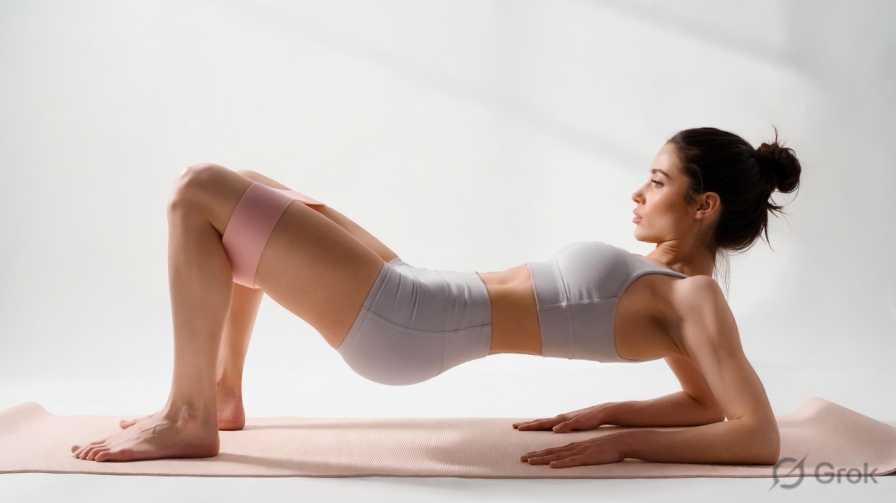
Photo by Gold’s Gym Nepal on Unsplash
This efficient 20-minute HIIT session targets the lower body and core with zero equipment. Expect plyometric moves that fire the glutes and elevate your heart rate, plus a purposeful warm-up and a calming cool-down. The format is simple and beginner-friendly: 45 seconds work, 15 seconds rest for six exercises, repeated for three rounds with a 60-second break between rounds.
Quick overview
- Duration: 20 minutes total
- Structure: Warm-up (2 rounds) → 3 HIIT rounds (45s on / 15s off × 6 exercises) → Cool-down
- Focus: Glutes, hamstrings, quads, core, and cardio
- Equipment: None
Warm-up (2 rounds)
Move through these to get the blood flowing, mobilize hips and shoulders, and prime your core. Take each exercise at a controlled pace—quality over speed.
- Jumping jacks — 30 seconds. Keep a steady breath and a pace you can hold.
- Inchworms — Walk hands to high plank, squeeze abs and glutes, then walk back up. Move slowly and focus on form.
- Hip opener pulses — Alternating legs, bring the front foot to the outside and sit into the stretch with a small pulse. Loosens hips for lunges and squats.
- Mountain climbers (knees to middle) — 30 seconds. Keep breaths steady; step in if you need a lower-impact version.
- Rest — 60 seconds between repeats to sip water and shake out the legs.
Main HIIT Circuit
Perform each exercise for 45 seconds, rest 15 seconds, then move to the next. Complete all six exercises for one round, take a 60-second rest, then repeat for a total of three rounds.
Exercises and cues
- Drop lunges — Step into a lunge with chest up, knee tracking over the ankle (not past toes). If jumping or switching quickly feels unstable, use reverse lunges instead. Focus on landing softly and staying on the balls of your feet.
- Burpee crunches — From standing, drop to push-up position, jump feet in, stand and bring opposite knee to elbow for a crunch. Keep your wrists and shoulders aligned during the drop, and slow down the jump if needed. Tip: prioritize the core crunch on each rep over speed.
- Plank jacks — High plank (hands) or forearm plank. Jump feet out and in while keeping a rigid core. Modification: step one foot out at a time or hold a steady plank. Keep your lower back neutral; avoid sagging.
- Step-to-jump squats — Step down with the same leg then explode up into a small jump, alternating legs each rep. If impact bothers you, remove the jump and perform a controlled step-up and squat. Maintain chest-up posture and drive through the heels.
- Pop jacks — A squat-jack hybrid: jump feet in/out while lowering into a squat and touching the ground (or perform a regular squat if you need less impact). Keep hips back, knees tracking over toes, and chest lifted.
- Tricep press backs (push-up to child’s pose) — From a high plank, lower to the ground (push-up), then sit back into child’s pose to stretch. Modification: perform push-ups from the knees. Keep core tight and nose pointing toward the mat during the lowering phase to protect the neck.
Form reminders
- Breathe: In through the nose, out through the mouth. Use breath to control effort.
- Core engaged: Protect your lower back by keeping abs pulled in throughout each move.
- Knee alignment: For lunges and squats, knees should track over the toes, not beyond them.
- Neutral head: Keep the neck aligned—look down during planks and push-ups rather than craning upward.
- Quality over quantity: If form starts to slip, slow down, reset, then continue.
Sample timeline
- Warm-up: 2 rounds (approx. 6–8 minutes including rest)
- HIIT circuits: 3 rounds × (6 exercises × 45s on / 15s off) with 60s rest between rounds (approx. 12 minutes)
- Cool-down: 2–3 minutes
Cool-down and stretch
Finish by letting your breath slow down and lengthening the muscles you just worked.
- Cobra or low hip drop from plank: Drop hips to the floor and open the front body to stretch abs. Option to keep hips lifted and drop shoulders deeper into the stretch.
- Child’s pose: Sit back onto your heels, forehead to mat, breathe deeply and walk hands left to right to release the spine.
- Downward dog with heel drops: Hips high, alternate lowering each heel to loosen calves and hamstrings.
- Forward fold and roll up: Let the head hang, then slowly roll vertebra by vertebra back up to standing.
Progressions and tweaks
- To make it harder: increase to 50/10 intervals, add a fourth round, or hold light dumbbells for squats and lunges.
- To make it easier: step instead of jump, shorten work intervals to 30 seconds, or keep more movements low-impact.
- Frequency suggestion: 2–4 times per week depending on recovery and other training.
Why this workout works
This routine combines strength and plyometric movement patterns to build glute activation, strengthen the core, and improve cardiovascular fitness in a compact time window. The warm-up primes mobility and core stability, the circuits drive metabolic intensity and muscle fatigue, and the cool-down helps recovery and flexibility.
Give this workout everything you have for the full 20 minutes, stay mindful of form, and modify as needed. Feel the burn, focus on your breath, and enjoy that post-workout energy boost.